
Welcome to Religious Education


Meet our staff
- Mrs A Matthews (Head of Department)
- Ms K Freeman (Second in Department)
- Ms P Fegan
Downloads
Our curriculum is organised in such a way that it provides learners with the best opportunities to be successful in their learning. Our principles focus on depth not just breadth by creating a mastery within the curriculum, which stretches learners and accelerates their progress over their 7 year learning journey at our college. In this section of the website you will find the subject intent, implementation and impact.
Alongside this, are our long and medium term plans which enable all stakeholders to have a clear understanding of the content, knowledge and skills taught within this curriculum area. The long term plan also outlines the cultural capital experiences and career opportunities learners have within the subject, as well as our tailored approach to supporting learners’ metacognitive processes. Further to these documents, the discrete sequencing of lessons are in the College’s bespoke schemes of work that can be accessed through departments.
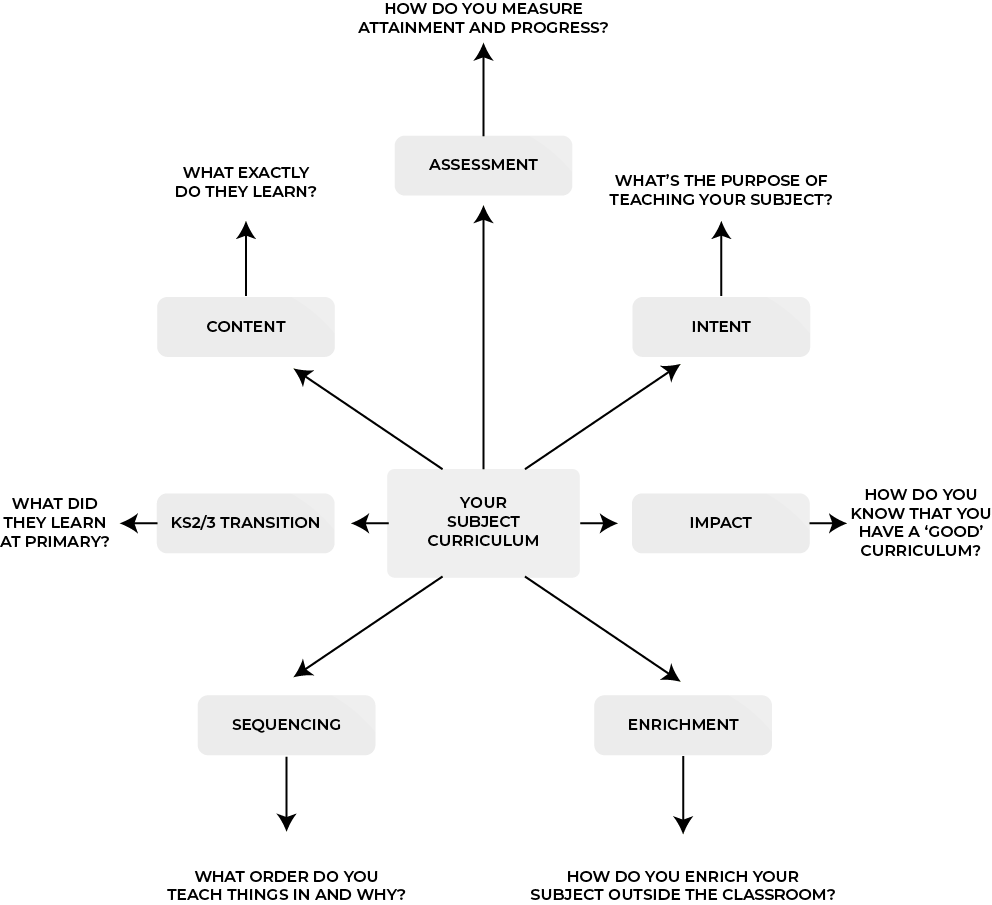
What exactly do they learn?
RE demands a process rooted in experience. Our curriculum offers a structured, progressive and developmental programme for all students. The structure is shaped by 6 knowledge lenses:
Hear, A study of the Word of God and revelation.
Believe, a study of the Creed, profession of faith, Trinity and incarnation.
Celebrate, a study of liturgy, sacraments, Rites and Feasts
Live, a study of people who live out their faith, CST, art and culture.
Dialogue, the relationship between different Christians and other religions and cultures.
Encounter, a study of religions.
RE enables our students to develop reflective attitudes, which will allow them to explore their story and vision of themselves and the community in which they live, from its local to global responsibilities. Students are taught to develop personal beliefs and values and know of their personal community responsibilities.
KS3 students follow the National Syllabus, “To know you more clearly” using the Religious Education Catholic Directory.KS4 students follow Edexcel Syllabus A GCSE Religious Studies and Key Stage 5 students follow an accredited Archdiocesan syllabus of 6th form RE.
What did they learn at primary?
Our head of department has a knowledge and awareness of what students learn within the RE primary curriculum and as such creates a KS3 curriculum that builds on the work covered by our new year 7 students who, in our Catholic feeder primaries, follow the “To know you more clearly” RED program. They keep up to date with any Archdiocesan changes and updates regarding the primary curriculum, to create a KS3 curriculum which allows students to build on this prior knowledge and begin to make progress immediately when starting at Archbishop Beck.
How do you measure attainment and progress?
Students are assessed formally twice across the college year in line with college policy. They are given a percentage grade alongside the class average, so pupils are aware of progress they are making. Staff seek to give feedback to students as to how best to improve their work and make use of green feedback forms which details to the learner what is needed to improve the grading/level of a piece of work. Feedback helps students be aware of their strengths and weakness of studied topic. In addition, we complete knowledge-based tests at the end of each unit of work. Again, a percentage and class average are given and logged in their exercise books to monitor progress over time.
What order do you teach things in and why?
The programme of study at KS3 has four structural elements. Knowledge Lenses, ways of knowing, expected outcomes and curriculum branches.
There are 6 curriculum branches that correspond to the 6 half terms of the school year. Our curriculum is rooted in the narrative of salvation history and leads pupils on a journey in each year that gives a sequence to their learning.
As they revisit each branch in every year, they should come to a deeper understanding of its significance for Catholic belief and practice, which then allows pupils to make links between the six knowledge lenses.
What’s the purpose of teaching your subject?
The purpose of Religious Education is:
- Allow the baptised to deepen their understanding of their own faith.
- To engage in a study of the mystery of God, the life and teachings of Jesus and the teachings of the Catholic Church.
- To enable pupils to deepen their religious and theological understanding.
- To present a vision of the Church’s moral and social teaching to provide pupils with a guide for living and the tools to critically engage with contemporary culture and society.
- To give pupils an understanding of world religions and world views and be able to respectfully engage in dialogue with others whose views are different to theirs
- To develop pupils who are religiously literate.
- To stimulate pupils’ imagination and provoke a desire for personal meaning as revealed in the truth of the Catholic faith.
How do you know that you have a ‘good’ curriculum?
Our curriculum is compliant with the Religious Education Directory.
With a curriculum that starts its journey in primary school and with each passing year, pupils’ can build upon and deepen their understanding of religion. With the growth of knowledge and understanding, we have expected outcomes that indicate what pupils are expected to know, remember and be able to do, using the language of the specialist.
How do you enrich your subject outside the classroom?
All students in year 7 & 8 have the opportunity of an “away day retreat”. Half day visits are also arranged to the Cathedral / Synagogue / Mosque. SVP, choir, assemblies, services, Liturgy group, leadership opportunities on Lourdes pilgrimage, Holocaust Centre trip, outside speakers/agencies or parish activities.