

GCSE RESULTS 2015


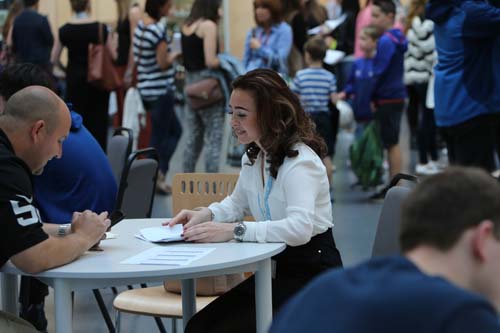





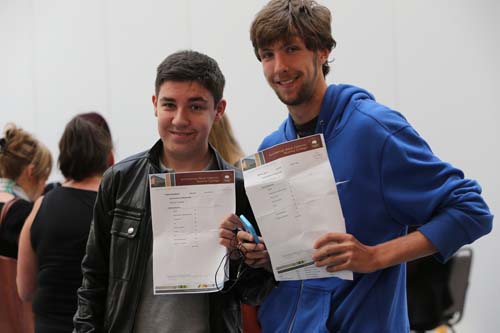
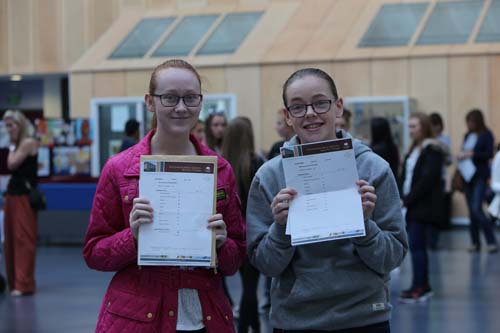
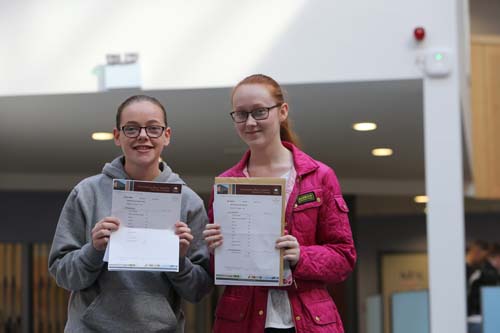
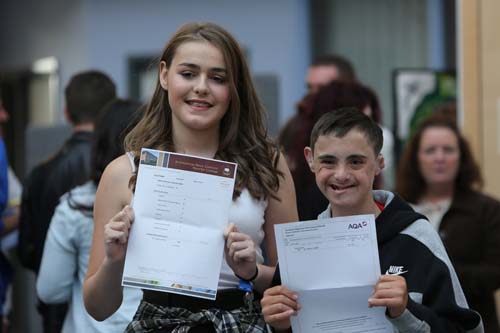
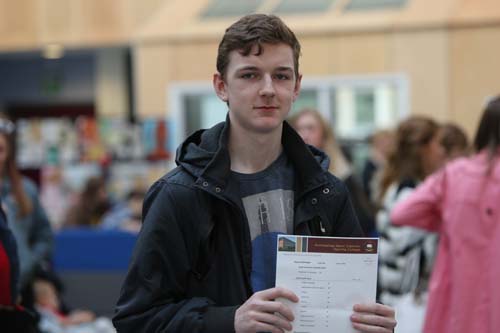
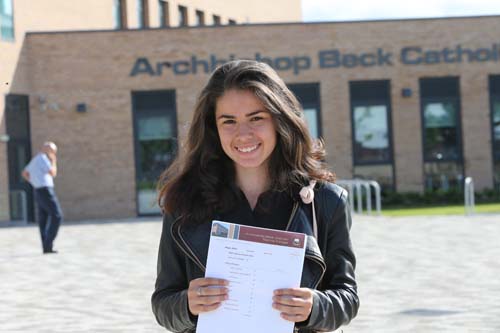
| Cohort information for pupils at the end of key stage 4 | |
| Number of pupils at the end of key stage 4 | 166 |
| Number of key stage 4 pupils who are non-mobile | 161 |
| % of key stage 4 pupils who are non-mobile | 97% |
| Number of disadvantaged pupils | 80 |
| % of disadvantaged pupils | 48% |
| Number of pupils below expected level at end of key stage 2 | 34 |
| % of pupils below expected level at end of key stage 2 | 21% |
| Number of pupils at expected level at end of key stage 2 | 93 |
| % of pupils at expected level at end of key stage 2 | 57% |
| Number of pupils above expected level at end of key stage 2 | 35 |
| % of pupils above expected level at end of key stage 2 | 22% |
| Number of pupils with English as an additional language | 8 |
| % of pupils with English as an additional language | 5% |
| Number of pupils with SEN with statements or EHC plan | 0 |
| % of pupils with SEN with statements or EHC plan | 0% |
| GCSE and equivalent achievements of pupils at the end of key stage 4 | |
| % achieving 5+ GCSEs at grade A* – C (or equivalent) including English & maths GCSEs | 41% |
| % achieving the English Baccalaureate | 22% |
| % achieving A*-C GCSE in English and maths | 45% |
| % of disadvantaged pupils achieving A*-C GCSE in English and maths | 33% |
| % of other pupils achieving A*-C GCSE in English and maths | 57% |
| % of low prior attainers achieving A*-C GCSE in English and maths | 6% |
| % of middle prior attainers achieving A*-C GCSE in English and maths | 45% |
| % of high prior attainers achieving A*-C GCSE in English and maths | 80% |
| Average total point score per pupil (best eight qualifications) with equivalences | 287.2 |
| Average grade per pupil (best eight qualifications) with equivalences | D+ |
| Average total point score per pupil (best eight qualifications) without equivalences | 286.2 |
| Expected progress from key stage 2 to 4 | |
| % of pupils at the end of key stage 4 achieving the expected level of progress in English | 69% |
| % of pupils at the end of key stage 4 included in the calculation of the English progress measure | 98% |
| % of pupils at the end of key stage 4 achieving the expected level of progress in maths | 49% |
| % of pupils at the end of key stage 4 included in the calculation of the maths progress measure | 99% |
| % boys achieving expected level of progress between key stage 2 and GCSE English at end key stage 4 | 60% |
| % boys achieving expected level of progress between key stage 2 and GCSE maths at end key stage 4 | 45% |
| % girls achieving expected level of progress between key stage 2 and GCSE English at end key stage 4 | 75% |
| % girls achieving expected level of progress between key stage 2 and GCSE maths at end key stage 4 | 49% |
| % non-mobile pupils achieving expected level of progress between key stage 2 and GCSE English at end key stage 4 | 69% |
| % non-mobile pupils achieving expected level of progress between key stage 2 and GCSE maths at end key stage 4 | 48% |
| % pupils achieving expected level of progress between key stage 2 and GCSE English at end key stage 4 and for whom English is an additional language | 83% |
| % pupils achieving expected level of progress between key stage 2 and GCSE maths at end key stage 4 and for whom English is an additional language | 67% |
| Year on year comparison | |
| % of pupils at the end of key stage 4 achieving 5 A*-C GCSEs (or equivalent) including English and maths – 2012 | 53% |
| % of pupils at the end of key stage 4 achieving 5 A*-C GCSEs (or equivalent) including English and maths – 2013 | 48% |
| % of pupils at the end of key stage 4 achieving 5 A*-C GCSEs (or equivalent) including English and maths – 2014 | 52% |
| Qualification Name | A*-C % |
| Art | 90 |
| BTEC Construction Single | 100 |
| BTEC Sport Single | 100 |
| Business Studies | 53 |
| Dance | 94 |
| DT Fashion | 87 |
| DT Food | 31 |
| DT Resistant Materials | 50 |
| English | 40 |
| English Language | 87 |
| English Literature | 81 |
| Geography | 42 |
| History | 43 |
| ICT | 47 |
| Maths | 52 |
| Maths AS | 100 |
| Maths Further | 100 |
| Music | 44 |
| Music AS | 100 |
| Music Graded 6 | 100 |
| Music Graded 7 | 100 |
| PE | 35 |
| RE | 46 |
| Sci Biology | 100 |
| Sci Chemistry | 100 |
| Sci Physics | 100 |
| Science Additional | 59 |
| Science Core | 31 |
| Spanish | 81 |
| Data to be published in 2015 Performance Tables (subject to inclusion of late results) | |
| A level and other advanced qualifications for students at the end of advanced level study | |
| Number of students at the end of advanced level study | 122 |
| A level Cohort and Results | |
| Number of A level students at the end of advanced level study | 83 |
| Number of A level full-time equivalent students at the end of advanced level study | 65.8 |
| % A level students achieving A levels at grades AAB or higher in at least 2 facilitating subjects | 0% |
| % achieving at least 3 A levels at A*-E | 39% |
| % achieving at least 2 A levels at A*-E | 77% |
| % achieving at least 1 A level at A*-E | 100% |
| Average point score per A level entry | 201.3 |
| Average point score per A level entry expressed as a grade | C- |
| Average point score per A level student (full-time equivalent) | 636 |
| Academic Cohort and Results | |
| Number of academic students at the end of advanced level study | 83 |
| Number of academic full-time equivalent students at the end of advanced level study | 65.8 |
| % achieving qualifications equivalent to at least 3 A levels at A*-E | 39% |
| % achieving qualifications equivalent to at least 2 A levels at A*-E | 77% |
| % achieving qualifications equivalent to at least 1 A level at A*-E | 100% |
| Average point score per academic entry | 201.3 |
| Average point score per academic entry expressed as a grade | C- |
| Average point score per academic student (full-time equivalent) | 636 |
| Vocational Cohort and Results | |
| Number of vocational students at the end of advanced level study | 81 |
| Number of vocational full-time equivalent students at the end of advanced level study | 56.2 |
| % achieving at least 3 substantial vocational qualifications | 26% |
| % achieving at least 2 substantial vocational qualifications | 57% |
| % achieving at least 1 substantial vocational qualification | 100% |
| Average point score per vocational entry | 226.1 |
| Average point score per vocational entry expressed as a grade | Dist |
| Average point score per vocational student (full-time equivalent) | 619.8 |
| Qualification Name | A*-B% | A*-C% | A*-E % |
| Art A2 | 0 | 83.3 | 100 |
| Business A2 | 64.4 | 97.8 | 100 |
| Dance A2 | 25 | 50 | 100 |
| Drama A2 | 25 | 50 | 100 |
| English Literature A2 | 54.5 | 90.9 | 100 |
| Geography A2 | 0 | 100 | 100 |
| History A2 | 100 | 100 | 100 |
| History AS Y13 | 50 | 100 | 100 |
| Maths A2 | 40 | 60 | 100 |
| Maths Further A2 | 20 | 60 | 100 |
| Media A2 | 7.5 | 70 | 97.5 |
| Music A2 | 0 | 100 | 100 |
| Music Tech A2 | 0 | 0 | 0 |
| PE A2 | 37.5 | 75 | 100 |
| Product Design A2 | 20 | 80 | 100 |
| Psychology A2 | 0 | 20 | 100 |
| Science Biology A2 | 0 | 100 | 100 |
| Science Chemistry A2 | 0 | 0 | 100 |
| Science Physics A2 | 80 | 100 | 100 |
| Turkish A2 | 100 | 100 | 100 |
| Qualification Name | A*-B% | A*-C% | A*-E % |
| BTEC Business Double Y13 | 12.5 | 87.5 | 100 |
| BTEC Business Single Y13 | 12.5 | 25 | 100 |
| BTEC Fashion Single Y13 | 40 | 60 | 100 |
| BTEC Health Double Y13 | 10 | 60 | 100 |
| BTEC Health Single Y13 | 40 | 80 | 100 |
| BTEC ICT Single Y13 | 44.1 | 70.6 | 100 |
| BTEC Media Single Y13 | 45.5 | 63.6 | 100 |
| BTEC Science Single Y13 | 71.4 | 85.7 | 100 |
| BTEC Sport Double Y13 | 0 | 12.5 | 100 |
| BTEC Sport Single Y13 | 26.7 | 40 | 100 |
| BTEC Travel Single Y13 | 66.7 | 86.7 | 100 |